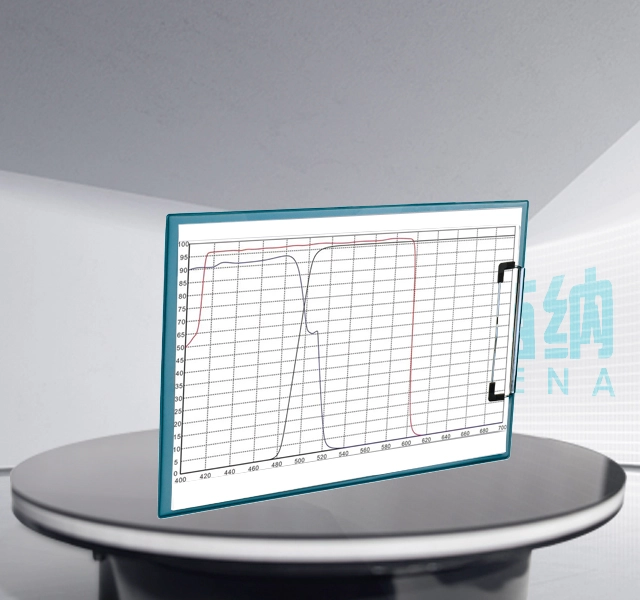
Overview of Prism Camera PrinciplesPrism cameras leverage prism-based light splitting technology to distribute incident light into different channels. Each channel’s image can achieve pixel-level ali...
A monochromator is a device that produces a beam of radiation with high spectral purity. Its function is to decompose composite light into monochromatic light or spectral bands of a certain width. The...
Magnetorheological Finishing (MRF) is an innovative processing technology that integrates theories from electromagnetism, analytical chemistry, and fluid dynamics. Its “polishing head” is formed by ...
The pixel array of image sensors (such as CCD, CMOS, etc.) samples the image formed by the objective lens, as shown in Figure 1.Assume the pixel size of the image sensor is ( p ), and the highest freq...
The basic principle of holography is to use interference to record wavefront information, and then reproduce the 3D image through diffraction by illuminating the recording medium. Why is it called hol...
Reflective optical systems are widely used in various fields today, primarily due to their ability to avoid chromatic aberration while achieving high imaging quality. Compared to refractive systems, r...
Quantum Optics: Quantum optics is the science that studies the quantum properties of light. One fascinating phenomenon in this field is quantum entanglement. Imagine two photons connected by an invisi...
The principle of light diffraction is as follows: when light encounters an obstacle or a small aperture, if the size of the obstacle or aperture is comparable to or smaller than the wavelength of the ...